Leeds United isn’t just a football club—it’s a legacy carved in passion, pride, and unforgettable moments. From glory days to fierce comebacks, this Yorkshire giant continues to capture hearts worldwide.
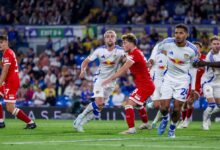
Leeds United: A Legacy Forged in Football History

Founded in 1919, Leeds United has grown into one of England’s most iconic football institutions. The club emerged from the ashes of Leeds City, banned for financial misconduct, and quickly rose through the ranks to become a dominant force in English football. Their journey reflects resilience, ambition, and a deep connection with their fanbase.
The Founding and Early Years
Leeds United was established on October 17, 1919, following the disbandment of Leeds City by the Football League due to illegal payments during World War I. The new club was formed to fill the void, and under the stewardship of local businessman Arthur Fairclough, they began their climb.
- Joined the Football League Second Division in 1920.
- First promotion to the First Division came in 1924.
- Early decades were marked by inconsistency but laid the foundation for future success.
The club’s early identity was shaped by its working-class roots and strong community support, particularly from the residents of the Elland Road area.
Don Revie Era: The Golden Age
The true transformation of Leeds United began in 1961 when Don Revie took over as manager. What followed was a golden era that redefined English football. Revie instilled discipline, tactical innovation, and a winning mentality that turned Leeds into a powerhouse.
“We weren’t dirty; we were determined.” – Don Revie on the club’s aggressive playing style.
Under Revie, Leeds won two First Division titles (1968–69, 1973–74), one FA Cup (1972), one League Cup (1968), and two Inter-Cities Fairs Cups (1968, 1971). The team became known for its physicality, pressing game, and relentless work ethic.
- Revie built a squad around legends like Billy Bremner, Jack Charlton, and Norman Hunter.
- Introduced sports science and fitness regimes ahead of their time.
- Developed a fierce rivalry with Liverpool and Manchester United.
Despite criticism for their hard-tackling style, Leeds under Revie were pioneers of modern football tactics. Their influence can still be seen in today’s high-pressing systems.
Leeds United’s Greatest Players of All Time
No discussion about Leeds United is complete without honoring the heroes who wore the white shirt with pride. These players didn’t just perform—they defined eras and inspired generations.
Billy Bremner: The Heart and Soul
Billy Bremner, the diminutive midfield dynamo, was the embodiment of Leeds United’s spirit. Standing at just 5’4”, Bremner played with unmatched intensity, leading by example and captaining the side during its most successful period.
- Capped 54 times for Scotland.
- Played over 770 games for Leeds between 1959 and 1976.
- Won two league titles, the FA Cup, and two Fairs Cups.
Bremner’s leadership and tenacity made him a fan favorite. Even after leaving the club, his legacy remained untarnished, and he returned as manager in the 1980s, though with limited success.
Lucas Radebe: The Chief
Lucas Radebe, affectionately known as “The Chief,” joined Leeds in 1994 from Kaizer Chiefs in South Africa. Initially signed as part of a deal to bring Phil Masinga to Elland Road, Radebe quickly became the cornerstone of the defense.
- Played 262 games for Leeds between 1994 and 2005.
- Captained both Leeds United and the South African national team.
- Admired by Nelson Mandela, who called him a national hero.
Radebe’s composure, leadership, and loyalty earned him legendary status. He played through injuries and helped stabilize the club during turbulent times, becoming a symbol of resilience.
Eric Cantona: The Enigmatic Genius
Before becoming a Manchester United icon, Eric Cantona briefly played for Leeds United. Signed in 1992, Cantona brought flair, vision, and unpredictability to the team. His time at Leeds was short but impactful.
- Scored 13 goals in 41 appearances.
- Played a key role in Leeds winning the 1991–92 First Division title—the last before the Premier League era.
- His transfer to Manchester United in November 1992 shocked the football world.
Cantona’s departure marked a turning point in English football history. Had he stayed, Leeds might have dominated the early Premier League years.
Leeds United’s Rivalries: Passion, Pride, and Pain
Rivalries are the lifeblood of football culture, and Leeds United has no shortage of them. These fixtures aren’t just games—they’re battles for regional supremacy and bragging rights.
Manchester United: The North West vs. Yorkshire
The rivalry with Manchester United is one of the most intense in English football. Though geographically not the closest, the competition intensified during the Revie era and exploded in the 1990s.
- Leeds won the league in 1992; United dominated the Premier League thereafter.
- Eric Cantona’s transfer fueled the fire.
- Matches often feature high stakes and heated confrontations.
While not a traditional derby, the Leeds-Manchester United clash carries emotional weight, especially for older fans who remember the battles of the 60s and 70s.
Derby County: The East Midlands Feud
The rivalry with Derby County is rooted in geography and historical competition. Known as the “East Midlands Derby,” this fixture has seen some dramatic moments.
- Both clubs competed fiercely in the 1970s for league honors.
- Derby fans often refer to Leeds as “dirty,” a label from the Revie era.
- The rivalry cooled somewhat after Leeds’ relegation in 2004, but sparks remain.
Matches between the two have occasionally turned violent, reflecting the deep-seated animosity between fanbases.
York City: The Local Derby
York City represents the closest geographical rival, making the Yorkshire derby a matter of local pride. Though York has spent most of their history in lower divisions, the fixture holds symbolic importance.
- First competitive meeting in 1953; Leeds won 4–0.
- Rarely played due to differing league levels.
- When they do meet, it’s a chance for Leeds to assert dominance in the county.
While not as fierce as other rivalries, the match against York City is cherished by fans for its regional significance.
Leeds United in the Premier League: Glory, Relegation, and Redemption
The Premier League era has been a rollercoaster for Leeds United. From early dominance to financial collapse and eventual resurgence, the club’s journey mirrors the volatility of modern football.
1990s: Champions Before the Premier League
Leeds United’s last league title came in the 1991–92 season, the final year of the old First Division. Managed by Howard Wilkinson, the team combined youth, experience, and tactical discipline.
- Key players included Gordon Strachan, Gary McAllister, and Lee Chapman.
- Won the title with 82 points, finishing four ahead of Manchester United.
- Also won the League Cup in 1990.
This triumph was overshadowed by the impending launch of the Premier League, which shifted financial power to clubs with better commercial appeal. Leeds, despite their success, struggled to adapt.
Financial Collapse and Relegation
In the early 2000s, Leeds United made a deep run in the UEFA Champions League semifinals (2001), but the cost was catastrophic. The club spent heavily on transfers and wages, betting on European success to fund their ambitions.
“We were living beyond our means. The dream turned into a nightmare.” – Peter Ridsdale, former Leeds chairman.
When qualification for the Champions League eluded them in subsequent seasons, revenue dried up. Massive debts accumulated, leading to player sales, relegation in 2004, and eventual descent into League One by 2007.
- Sold stars like Rio Ferdinand, Alan Smith, and Robbie Keane.
- Entered administration in 2007.
- Faced a 15-point deduction, accelerating their fall.
This period remains a cautionary tale about financial mismanagement in football.
Marcelo Bielsa and the Return to the Premier League
The turning point came in 2018 with the appointment of Marcelo Bielsa as manager. Known for his intense philosophy and revolutionary tactics, Bielsa transformed Leeds United.
- Implemented a high-pressing, attacking 4-1-4-1 system.
- Instilled a culture of discipline and effort.
- Leeds finished third in the Championship in 2018–19 but lost in the playoffs.
In 2019–20, Leeds secured the Championship title, earning promotion back to the Premier League after a 16-year absence. Their style of play earned widespread acclaim, with Bielsa dubbed “The Messiah” by fans.
For more on Bielsa’s impact, read the BBC’s profile on his Leeds revolution.
Elland Road: The Home of Leeds United
Elland Road isn’t just a stadium—it’s a fortress, a sanctuary, and a symbol of identity for Leeds United supporters. Located in the Beeston area of south Leeds, it has hosted countless memorable moments since opening in 1897.
History and Development
Originally used by Leeds City, Elland Road was taken over by Leeds United in 1919. Over the decades, it has undergone numerous renovations to meet modern standards.
- Current capacity: approximately 37,792.
- Four stands: West Stand, East Stand, South Stand (John Charles Stand), and North Stand (Kop).
- Hosted international matches, including England fixtures and Euro 1996.
The stadium has witnessed triumphs, tragedies, and transformations, standing as a constant through the club’s ups and downs.
The Atmosphere on Matchday
Elland Road is renowned for its electric atmosphere, especially when Leeds are in form. The Kop stand, home to the most vocal supporters, generates a wall of sound that can intimidate any visiting team.
- Fans sing “Marching On Together” with passion.
- Chants are often creative, humorous, and fiercely loyal.
- The stadium’s proximity to the pitch enhances the intensity.
Even during the club’s darkest days, Elland Road remained full, a testament to the unwavering support of the fanbase.
Future Expansion Plans
There have been ongoing discussions about expanding Elland Road to increase capacity and modernize facilities. Proposals include extending the East Stand to add over 10,000 seats.
- Expansion would bring capacity to over 50,000.
- Plans face logistical and financial challenges.
- Supporters are divided—some want growth, others fear losing the stadium’s character.
Any expansion would position Leeds United to compete more effectively in commercial terms, but preserving the soul of Elland Road is equally important.
Leeds United’s Youth Academy: Breeding Future Stars
Leeds United has a proud tradition of developing young talent. The club’s academy, known as Thorp Arch, has produced players who’ve gone on to succeed at the highest levels.
Notable Academy Graduates
The Leeds youth system has been a pipeline for homegrown excellence. Some of the most notable graduates include:
- Harry Kewell: Australian international who played a key role in Leeds’ Champions League run.
- Alan Smith: Versatile forward who captained the team before moving to Manchester United.
- Lucas João and Sam Byram: Recent graduates who made first-team impacts.
The academy emphasizes technical development, tactical intelligence, and mental resilience, aligning with modern football demands.
Investment in Youth Development
Under current ownership, Leeds has increased investment in youth infrastructure. The Thorp Arch training complex is among the best in England, featuring state-of-the-art facilities.
- Part of the EPPP (Elite Player Performance Plan) Category One status.
- Focus on education and personal development alongside football.
- Partnerships with local schools and community programs.
This long-term strategy aims to reduce reliance on expensive transfers and build a sustainable model.
Future Prospects from the Academy
The next generation of Leeds talent is already emerging. Young players like Crysencio Summerville and Archie Gray have shown promise in senior football.
- Summerville, a dynamic winger, became a fan favorite under Jesse Marsch.
- Gray, a composed midfielder, made his debut at 17 and attracted interest from top clubs.
With continued support, the academy could once again become a cornerstone of Leeds United’s success.
Leeds United’s Cultural Impact and Global Fanbase
Beyond the pitch, Leeds United has left an indelible mark on culture, music, and global football fandom. The club’s identity resonates far beyond Yorkshire.
Fans Around the World
Leeds United boasts a passionate international following. Supporters’ clubs exist in the USA, Australia, Canada, and across Europe.
- The “Leeds United International Supporters Club” organizes global meetups.
- Streaming services have made matches accessible worldwide.
- Fans often cite the club’s underdog spirit and Bielsa’s philosophy as draws.
Social media has amplified this global reach, with millions engaging online during matches.
Leeds in Music and Media
The club has been referenced in songs by artists like Kaiser Chiefs and The Enemy. The chant “Marching On Together” has become an anthem beyond football.
- Documentaries like “Take Us Home: Leeds United” (Amazon Prime) showcased Bielsa’s first season.
- The series boosted global awareness and attracted new fans.
Leeds’ story—of fall and redemption—resonates with audiences who appreciate drama and authenticity.
Community Engagement and Social Initiatives
Leeds United actively engages in community work through the Leeds United Foundation.
- Programs focus on education, health, and social inclusion.
- Initiatives for disadvantaged youth and mental health awareness.
- Partnerships with local charities and schools.
The club sees itself as a pillar of the community, using its platform for positive change.
What is Leeds United’s most successful era?
Leeds United’s most successful era was under manager Don Revie in the 1960s and 1970s. During this period, the club won two First Division titles, one FA Cup, one League Cup, and two Inter-Cities Fairs Cups, establishing themselves as a dominant force in English and European football.
Why was Leeds United relegated in 2004?
Leeds United were relegated in 2004 due to a combination of financial mismanagement, heavy spending on transfers and wages, failure to qualify for the UEFA Champions League, and subsequent player sales. The club accumulated massive debts, leading to a decline in performance and eventual relegation from the Premier League.
Who is the greatest Leeds United player of all time?
While opinions vary, Billy Bremner is widely regarded as the greatest Leeds United player. As captain during the Revie era, his leadership, passion, and consistency made him a symbol of the club’s identity. Lucas Radebe and Jack Charlton are also frequently mentioned among the all-time greats.
How did Marcelo Bielsa change Leeds United?
Marcelo Bielsa transformed Leeds United by implementing a high-intensity, attacking style of play, instilling discipline, and rebuilding the squad with young, energetic players. His leadership led to promotion to the Premier League in 2020 after a 16-year absence, reigniting hope and pride among fans.
What is the capacity of Elland Road?
Elland Road has a current capacity of approximately 37,792 spectators. There are ongoing discussions about expanding the stadium, particularly the East Stand, which could increase capacity to over 50,000 in the future.
Leeds United is more than a football club—it’s a story of triumph, tragedy, and relentless hope. From the glory days of Don Revie to the modern revival under Bielsa, the club has endured and inspired. With a rich history, passionate fanbase, and commitment to youth and community, Leeds United continues to march forward, together.
Further Reading:
